The Open Ownership Principles — Public access
Sufficient data should be freely accessible to the public
- The public should have access to BO data, at a minimum to a subset that is sufficient for users to understand and use the data.
- This data should be available free of charge.
- This data should be available as open data: published under a specified licence which allows anyone to access, use, and share it without barriers such as identification, registration requirements, or the collection of data about users.
- This data should be available in bulk and searchable by both company and beneficial owner.
- A legal basis for the publication of data should be established, in line with privacy and data protection legislation, and potential negative effects of the publication of data should be understood and mitigated for.
- A broad purpose for publishing the data based on accountability and the public interest should be specified in law.
- Where information about certain classes of persons (e.g. minors) is exempt from publication, the exemption should be clearly defined, justified, and narrowly interpreted.
- Where a disclosure system permits anonymity in published data on a case-by-case basis in a protection regime (for example, to mitigate personal safety risk), the grounds for granting anonymity should be clearly defined, proportionate, and fairly applied.
- Where data has been exempted from publication, the publicly available data should note that BO information is held by authorities but has been exempt from publication.
Having a public BO register means that law enforcement, businesses, journalists, and citizens from around the world can easily access information on the BO of companies. Having widespread third party use of data can drive up data quality, and can increase impact by expanding the user base beyond authorities. For instance, publicly available BO data can reduce the cost and complexity of due diligence and risk management for the private sector, thereby leveling the playing field and increasing competitiveness. Evidence shows that data in a public register is used much more widely when it is available without use of barriers such as registration, payment, or identification. This can be particularly important for enabling international users to access the data (for example, when tracing transnational links between companies).
Disclosure and publication of BO information has legitimate public interest purposes, and can be compliant with data protection and privacy legislation, as has been done in many different jurisdictions where BO systems have been implemented. In practice, this means that the fields of data that are collected and published (including identifiers) should be developed in the context of local legislation, whilst maximising availability of information that supports effective data use. Potential negative effects should be understood and mitigated for (for example, through implementing layered access and a protection regime), in compliance with the above principles of data usability.
In instances where a person is granted anonymity within BO data (e.g. under a protection regime), this should not automatically constitute an exemption to disclosure. Their BO will still need to be disclosed ownership and this information should still be available to authorities.
Implementation Guide
This OO Principle is particularly relevant in the following aspects of implementation. These correspond to steps in our Implementation Guide.
Resources
Privacy or public interest? Making the case for public information on company ownership
This is a summary of a research report from OpenOwnership, The B Team and The Engine Room in which we consider the legal implications of public beneficial ownership data to the public, evaluated from both the perspective of the companies holding that information and the authorities requiring it to be disclosed publicly, and the relationship with data protection and privacy laws.
Data Protection and Privacy in Beneficial Ownership Disclosure
This is a research report from Open Ownership, The B Team and The Engine Room in which we consider the legal implications of public beneficial ownership data to the public, evaluated from both the perspective of the companies holding that information and the authorities requiring it to be disclosed publicly, and the relationship with data protection and privacy laws.
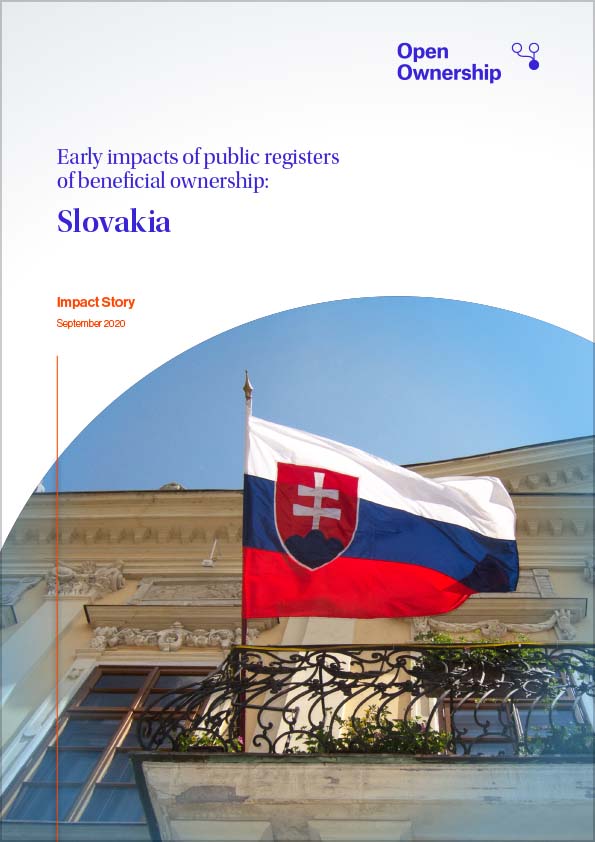
Early impacts of public registers of beneficial ownership: Slovakia
Slovakia was among the first countries in the world to implement a public beneficial ownership register and is a member of the Beneficial Ownership Leadership Group. Slovakian public beneficial ownership data was used to expose alleged cases of wrongdoing. Reaching this point required the Slovakian government to overcome challenges in that process, with practical lessons for other states implementing beneficial ownership transparency. This report provides details of Slovakia’s approach and case studies of the impact it has had.
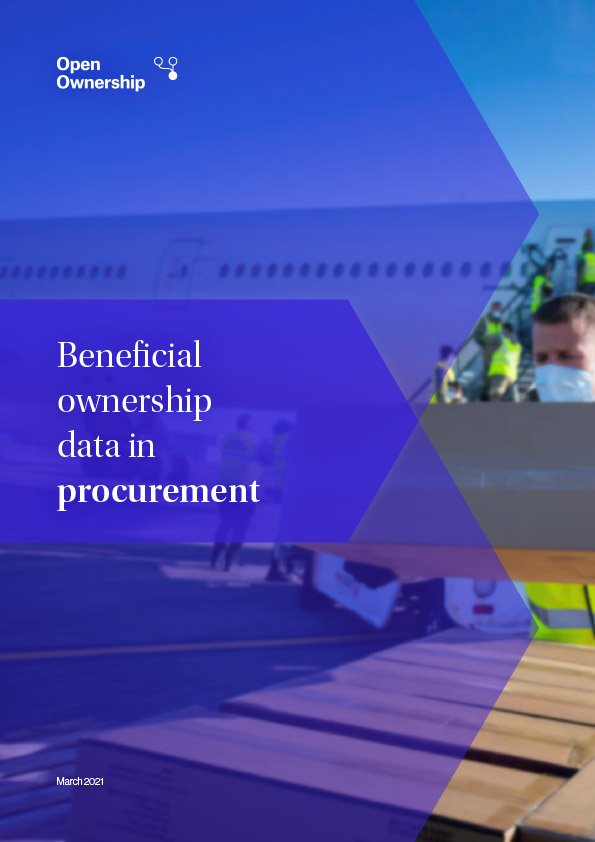
Beneficial ownership data in procurement
This policy briefing outlines the main ways beneficial ownership data can improve public procurement processes and objectives, and discusses some of the key considerations and decisions that implementers face.
It is available in English, Spanish and Indonesian.
Early impacts of public registers of beneficial ownership: United Kingdom
The UK was the first country in the world to commit to making beneficial ownership transparent. In 2016 it launched its public beneficial ownership – or Persons of Significant Control (PSC) – register. PSC data is widely used, and has been critical in investigations into financial crime and terrorism-related offences. This report provides details of the UK’s approach and case studies of the impact it has had.
Making central beneficial ownership registers public
This policy briefing outlines the benefits that arise from making a beneficial ownership register public. It looks at how different user groups are able to use the data when it is made public, and identifies the benefits this gives.
It argues that there is sufficient evidence for policymakers to act on the understanding that a public register will serve the public interest. It outlines key considerations for implementers and helps devise effective and safe BOT regimes appropriate for their contexts.